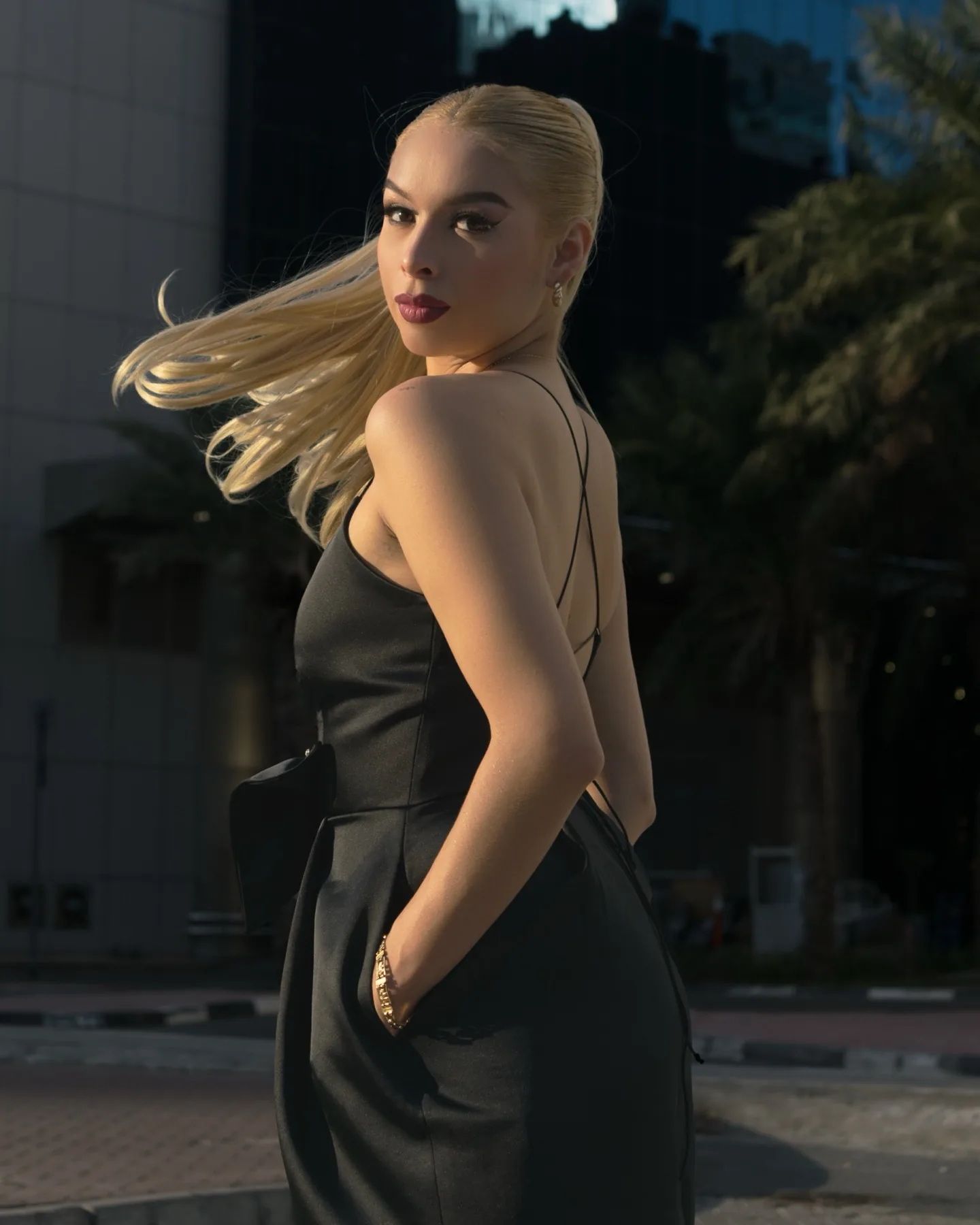
Before "what pose should I do", almost every client asks the same question first: "What should I wear?"
It is a reasonable thing to lose sleep over. Clothing is the one part of a photoshoot you have to decide before you ever meet the photographer, and it is doing more work than most people expect. The right outfit does not just look nice. It holds its shape under a camera, survives Dubai's heat and light, and matches the tone the photographs are meant to have.
This guide covers colour, fit, fabric, and the specific outfit decisions that come up on real Dubai sessions: desert light, studio backgrounds, midday heat and outdoor urban locations. Use it to plan your wardrobe before you book, not the night before the shoot.
If you only remember five things before you get dressed:
- Choose solid colour over busy pattern.
- Choose fitted or structured over loose and flowing.
- Choose breathable fabric if the shoot is outdoors.
- Bring one backup top in case of a mark, sweat or a change of light.
- Try the outfit on and sit, walk and raise your arms in it before the day.
That covers the essentials. The rest of this guide explains why each rule exists, so you can make good calls on the pieces that fall outside it.
1. Choose colour before you choose style
Colour is the first decision a camera notices, before fit, brand or trend. A few patterns hold up consistently across skin tones, lighting and locations:
- Solid black, white, denim and camel photograph cleanly in almost any light
- Jewel tones (emerald, burgundy, deep teal, sapphire) read as rich rather than flat
- Earth tones and warm neutrals suit desert and golden-hour locations
- Muted, dusty shades age better in photographs than bright, saturated ones
Busy prints, small checks and large logos tend to cause two problems on camera: they compete with your face for attention, and fine patterns can shimmer or vibrate under certain lenses and sensors, an effect called moiré. Save the statement pattern for a single accessory rather than the whole outfit.
If you are shooting more than one look, plan for contrast rather than repetition: a light neutral look and a darker, richer look give the set more range than two similar mid-tones.
2. Fit matters more than fabric brand
A still camera flattens three-dimensional fabric into a two-dimensional shape. Loose, flowing pieces that move beautifully in person can read as shapeless or oversized in a static frame.
As a general rule:
- Tailored or semi-fitted pieces hold a clean silhouette in standing and seated poses
- Very loose fabric works best when it is part of a deliberate movement shot, not a still pose
- Structured shoulders and waistlines photograph with more definition than fabric that hangs straight down
- Slightly cropped or tucked pieces usually photograph better than fabric that pools at the hips
This does not mean everything needs to be skin-tight. It means knowing which of your pieces have shape, and reserving the loosest items for frames where the photographer can use wind, walking or fabric movement on purpose.
3. Dress for Dubai's heat, not just the camera
An outfit that looks perfect in an air-conditioned room can behave very differently after twenty minutes outdoors. Dubai's heat and humidity are part of the shoot, not a detail to ignore while choosing clothes.
- Linen, cotton and lightweight knits breathe and crease in a way that still looks intentional
- Heavy synthetic fabric traps heat, shows sweat marks earlier and creases in a way that reads as untidy rather than textured
- Dark colours absorb more heat in direct sun; plan shade breaks between frames if you are wearing them outdoors
- Layers you can remove between setups (a jacket, a scarf) give you more looks without more outfit changes
Bring a spare top in a bag, even for a short outdoor session. A five-minute walk between locations in Dubai's midday sun is enough to change how a light-coloured top looks on camera. A golden-hour session also reduces both the heat and the harsh overhead light your outfit has to survive.
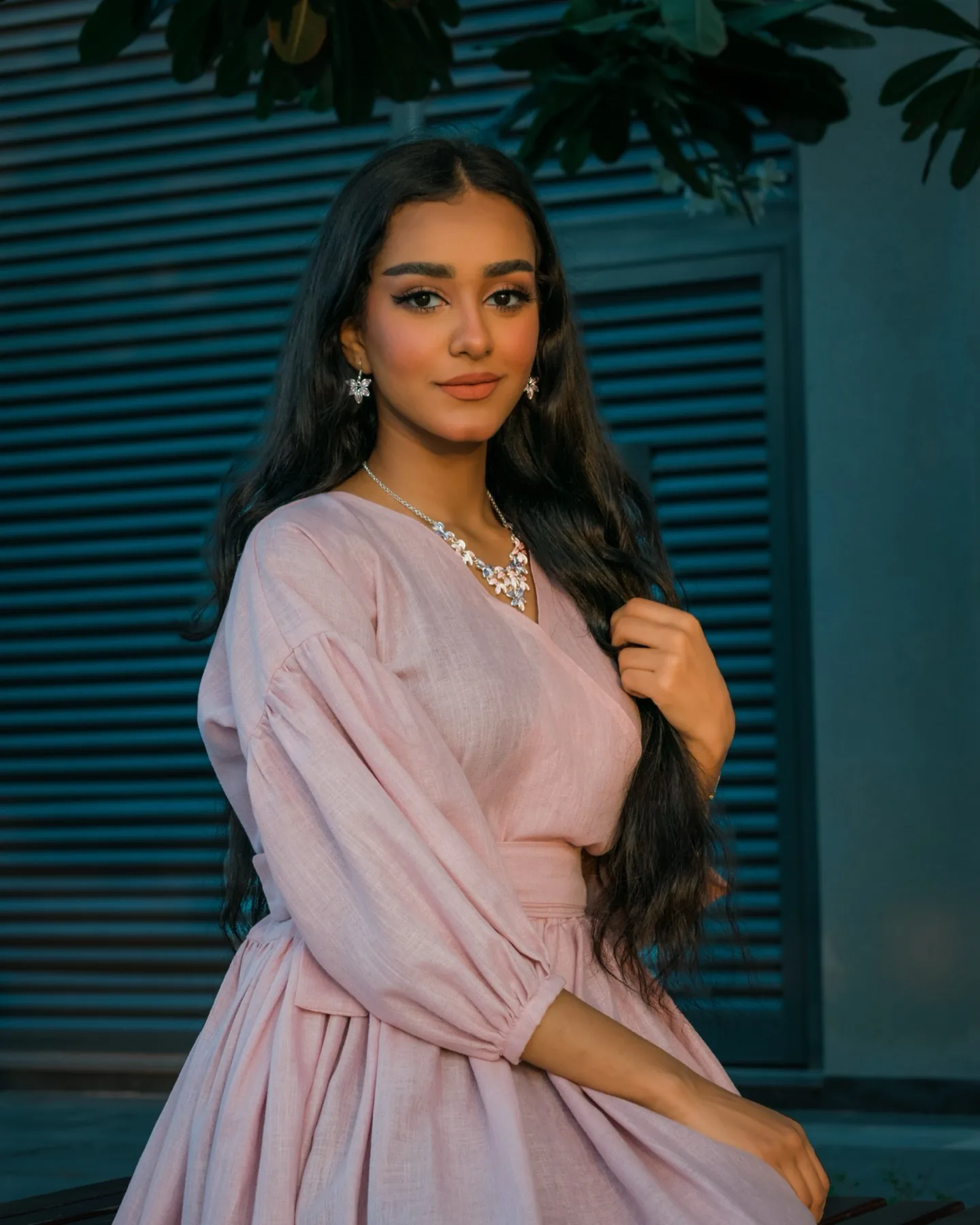
A breathable, lightweight fabric outdoors in Dubai - no visible strain after a full walking session.
4. Match the outfit to the location
The same outfit will not necessarily work everywhere. A quick way to plan is by location type:
Desert and golden hour
Warm neutrals, camel, rust, olive and soft earth tones sit naturally against sand and low sun. Flowing fabric can work well here specifically because there is usually space and wind to let it move.
Urban and architectural
Structured pieces and bolder colour hold their own against strong lines, glass and concrete. A location like Downtown or a modern interior can support a sharper, more editorial wardrobe than a natural setting.
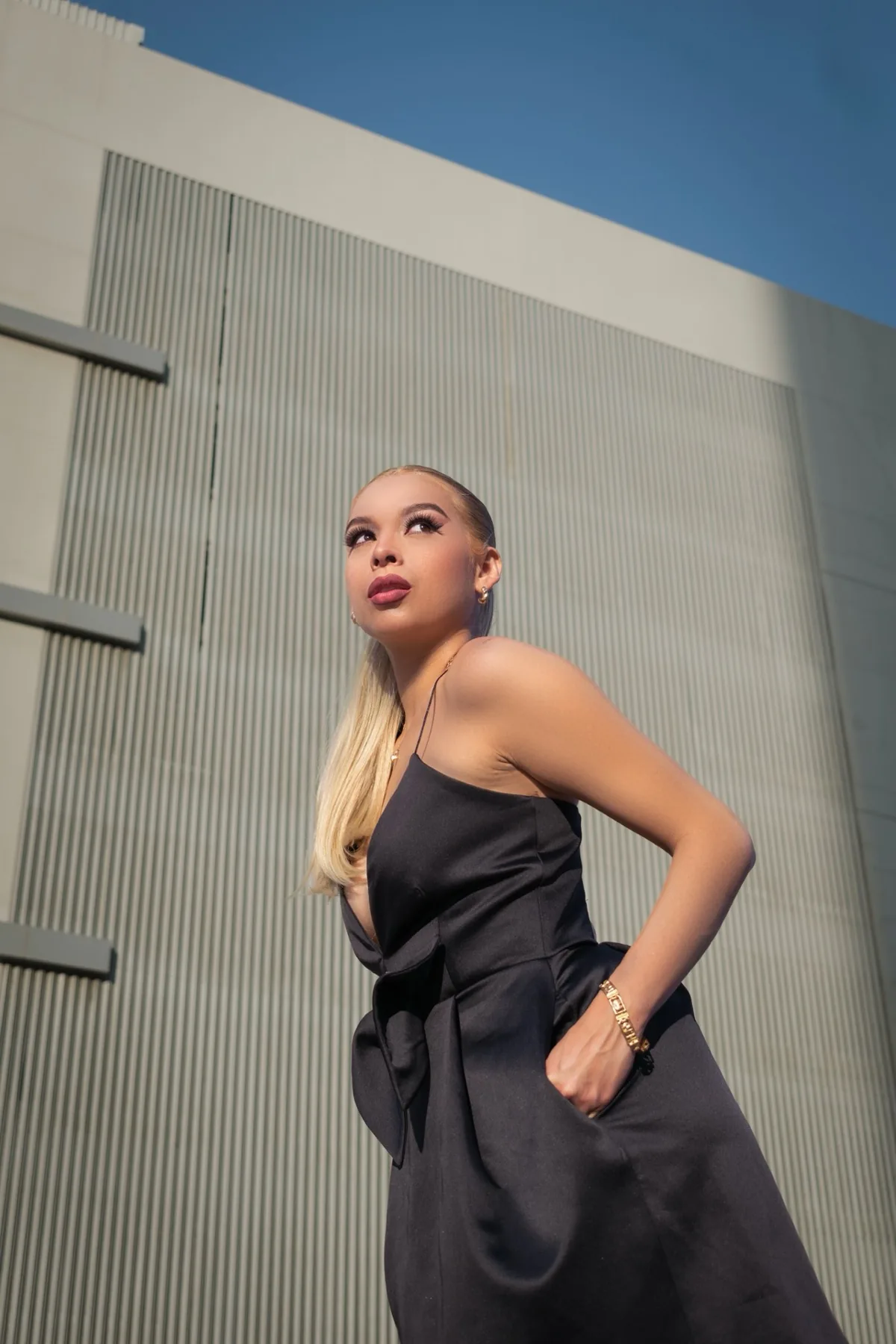
A structured silhouette and solid colour holding their own against glass and concrete.
Studio or clean background
Because the background is controlled, almost any colour works, though solid colour still photographs more predictably than pattern. This is the easiest setting to safely try a bolder or brighter piece.
Beach or waterside
Light, breathable fabric in soft tones usually complements natural light and water reflections better than dark, heavy fabric.
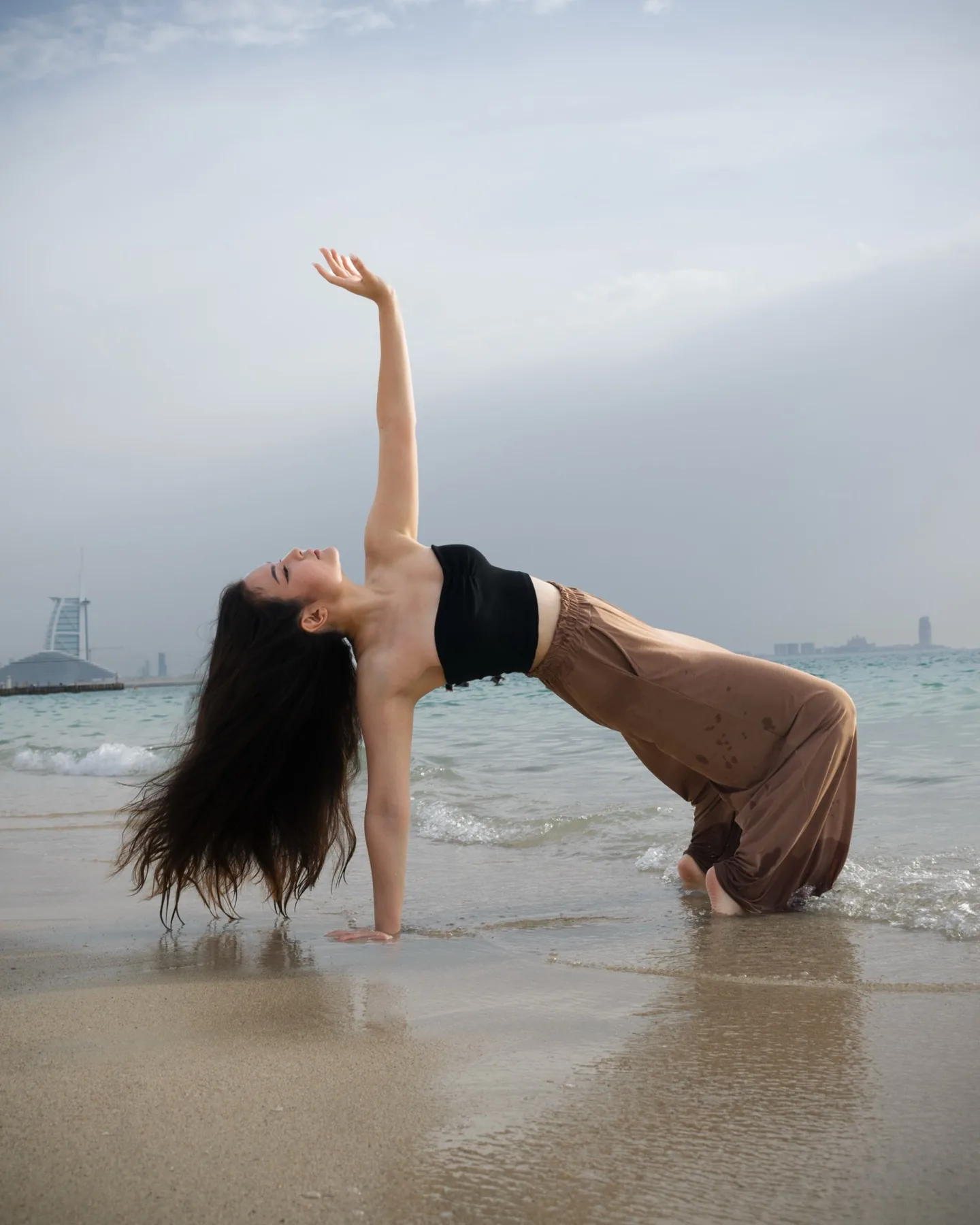
Soft tones and light fabric at the beach - nothing heavy enough to fight the reflected light off the water.
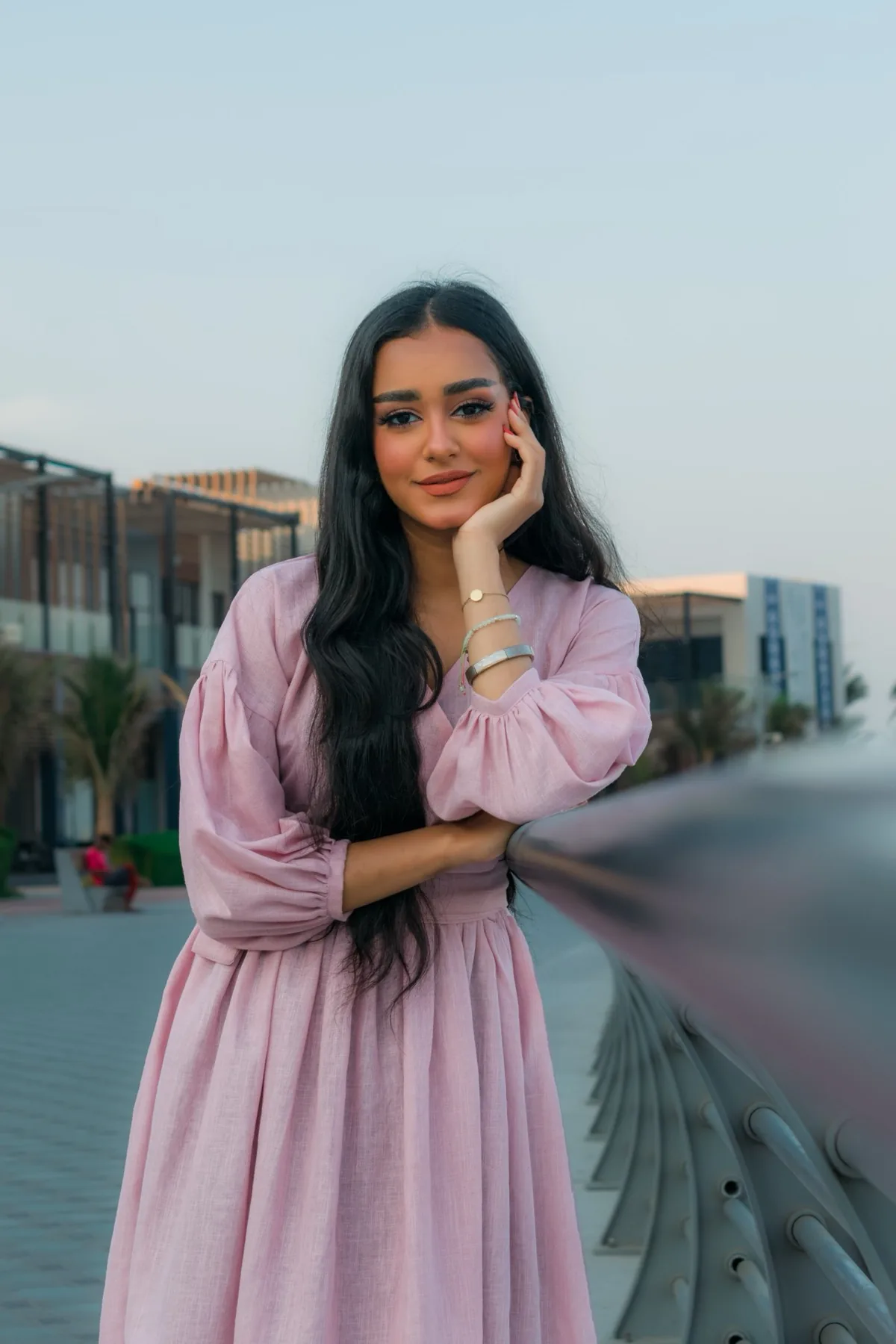
Solid colour, structured fit - the outfit holds its shape and stays out of the way of the light.
5. Plan two to three looks, not a suitcase
A common instinct is to bring every option "just in case." In practice, this usually slows the session down without adding real variety.
A workable plan for most sessions:
- The primary look. Whatever matches the main purpose of the shoot: a professional headshot, a portfolio image, a personal portrait.
- An alternate mood. A different colour palette, formality level or energy, to give the final set genuine range.
- A backup. A simple, reliable piece in case of a stain, a wardrobe malfunction or a sudden change in light or location.
More than three looks generally means more time spent changing than shooting. If you genuinely need several distinct concepts, it is worth discussing session length in advance rather than packing extra outfits into a standard time slot.
6. Test the outfit before the day
An outfit that looks right in the mirror standing still can behave differently once you sit, walk or raise your arms. Before the shoot:
- Sit down in it and check for pulling, gaping or creasing across the front
- Walk a few steps and see how the fabric moves
- Raise your arms and check sleeves, hems and any buttons under strain
- Check it in daylight, not only indoor lighting, since colours can shift noticeably outdoors
- Confirm it is genuinely comfortable, since discomfort shows in posture and expression well before it shows in the fabric
This takes ten minutes and avoids discovering a problem for the first time in front of the camera.
7. Keep accessories and grooming simple
Jewellery, watches and accessories can add polish, but too many competing pieces pull focus from the face. A workable approach:
- Choose one statement piece rather than several small ones
- Avoid accessories that catch strong direct light and create distracting glare
- Confirm hair and makeup plans in advance rather than adjusting them last minute on the day
- Bring blotting paper or powder for a midday outdoor session in Dubai's heat
What not to do when choosing an outfit
Do not buy something new the night before
An untested outfit is an unknown variable on a day that already has enough of them. Wear, sit and move in it beforehand.
Do not choose comfort over fit, or fit over comfort
Both matter. A perfectly cut outfit that pinches after twenty minutes will show in your expression. A comfortable outfit with no shape will show in the silhouette.
Do not ignore the weather forecast
A heavy outfit on a hot outdoor day, or a light outfit on a cool evening shoot, changes your comfort and your posture throughout the session.
Do not leave the decision until the morning of the shoot
Wardrobe decisions made under time pressure tend to default to whatever is clean, not whatever suits the shoot. Plan outfits when you book, not when you get dressed.
What to send Photoczaro before the shoot
Wardrobe planning works best as a conversation before the session, not a guess on the day. Before booking or during planning, it helps to share:
- Photographs of the outfits you are considering
- What the images are for (portfolio, personal, brand, social)
- The location or setting, if already decided
- Any colour, style or coverage preferences
- Whether hair and makeup will be professionally done
From there, Hatim can confirm which looks will hold up best for the location and light, and flag anything likely to cause a technical issue on camera before it becomes a surprise mid-session. This pairs naturally with posing guidance for first-time clients and with understanding what to expect at a professional photoshoot overall.
Frequently Asked Questions
Work with me
Based in Dubai. Send me your outfit options before the session and I'll help you plan a wardrobe that holds up on camera, in the heat, and at the location we choose.