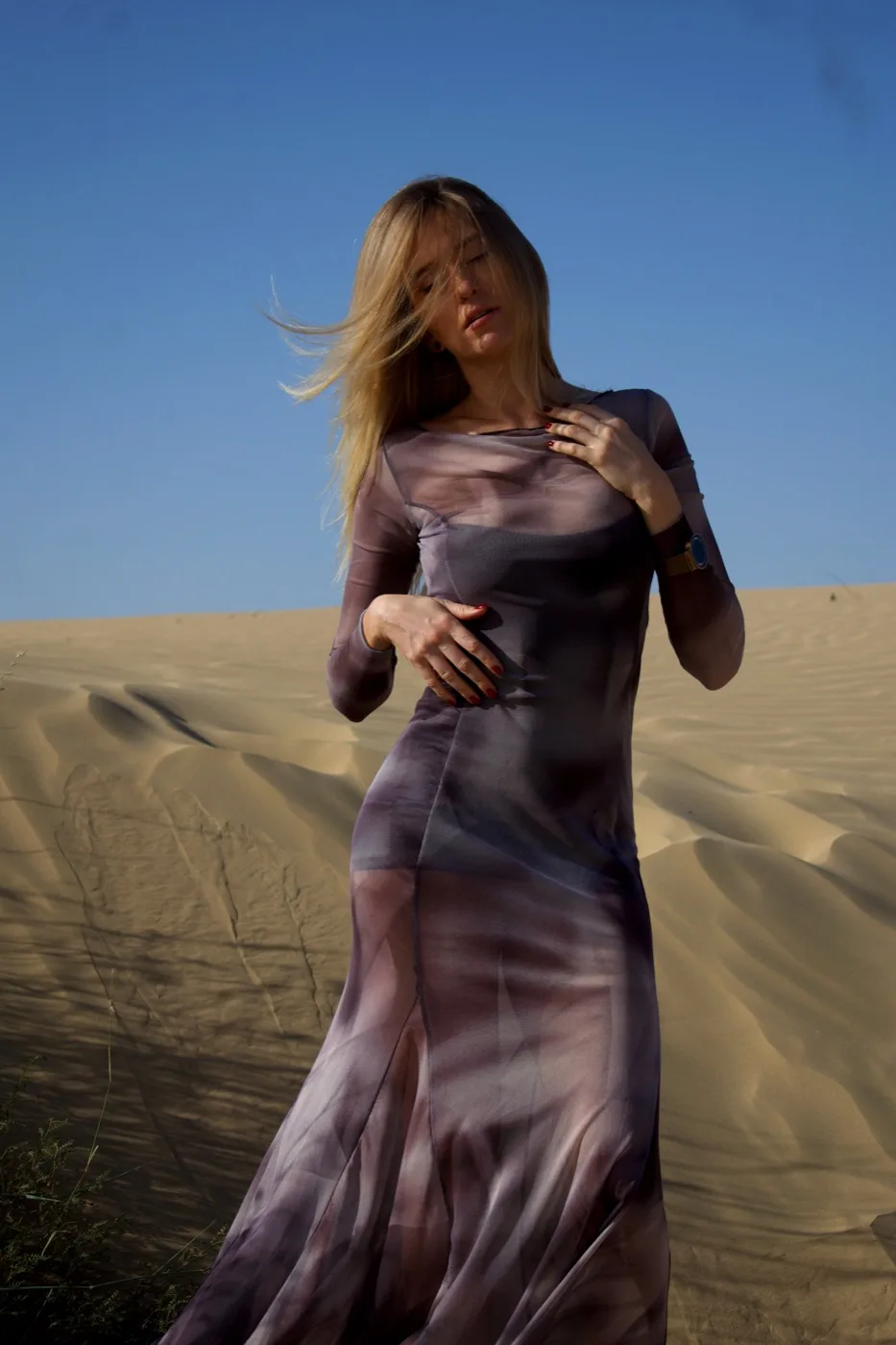
A desert shoot looks effortless in the final images: golden light, endless dunes, nothing to distract from the subject. Getting there is a bit more logistics than a city session. Here's what actually goes into planning one, from timing to permits to what the drive out and back adds to your day.
I shoot in the Dubai desert regularly, mostly at Al Marmoom, and the questions I get asked before a session are almost always the same: when should we go, do we need a permit, how long does it take, and what should we bring. This is the honest answer to all four.
Timing is everything
The desert only works within a narrow light window: the first hour after sunrise, or the last hour before sunset. Outside that window the light is flat and harsh, and the heat makes it genuinely uncomfortable to shoot for more than a few minutes at a time. Sunset sessions are more popular because they don't require a pre-dawn start, but sunrise gives you cooler temperatures and completely empty dunes.
November through March. Daytime highs sit in the low-to-mid 20s Celsius, which means you're not racing the heat the way you are in summer, and there's more flexibility around exact timing. June through September is workable, but only right at sunrise or sunset, and the session itself needs to move quickly.
Do you need a permit?
For a personal or portfolio session with one photographer and one or two people, generally no. Public desert conservation areas like Al Marmoom are open for casual, small-scale portrait work without a formal filming permit. That changes if you're bringing a larger crew, a drone, lighting equipment, or shooting for commercial use; those require clearance from the Dubai Film and TV Commission arranged in advance. If you're unsure which category your shoot falls into, ask before the day rather than on-site.
What the day actually looks like
Most desert sessions run 60 to 90 minutes of actual shooting, timed tightly around the light. Add the drive: roughly 30 to 45 minutes each way from central Dubai to Al Marmoom, depending on where you're starting from. Budget a half-day overall once you include getting ready, the drive, the shoot itself, and the drive back.
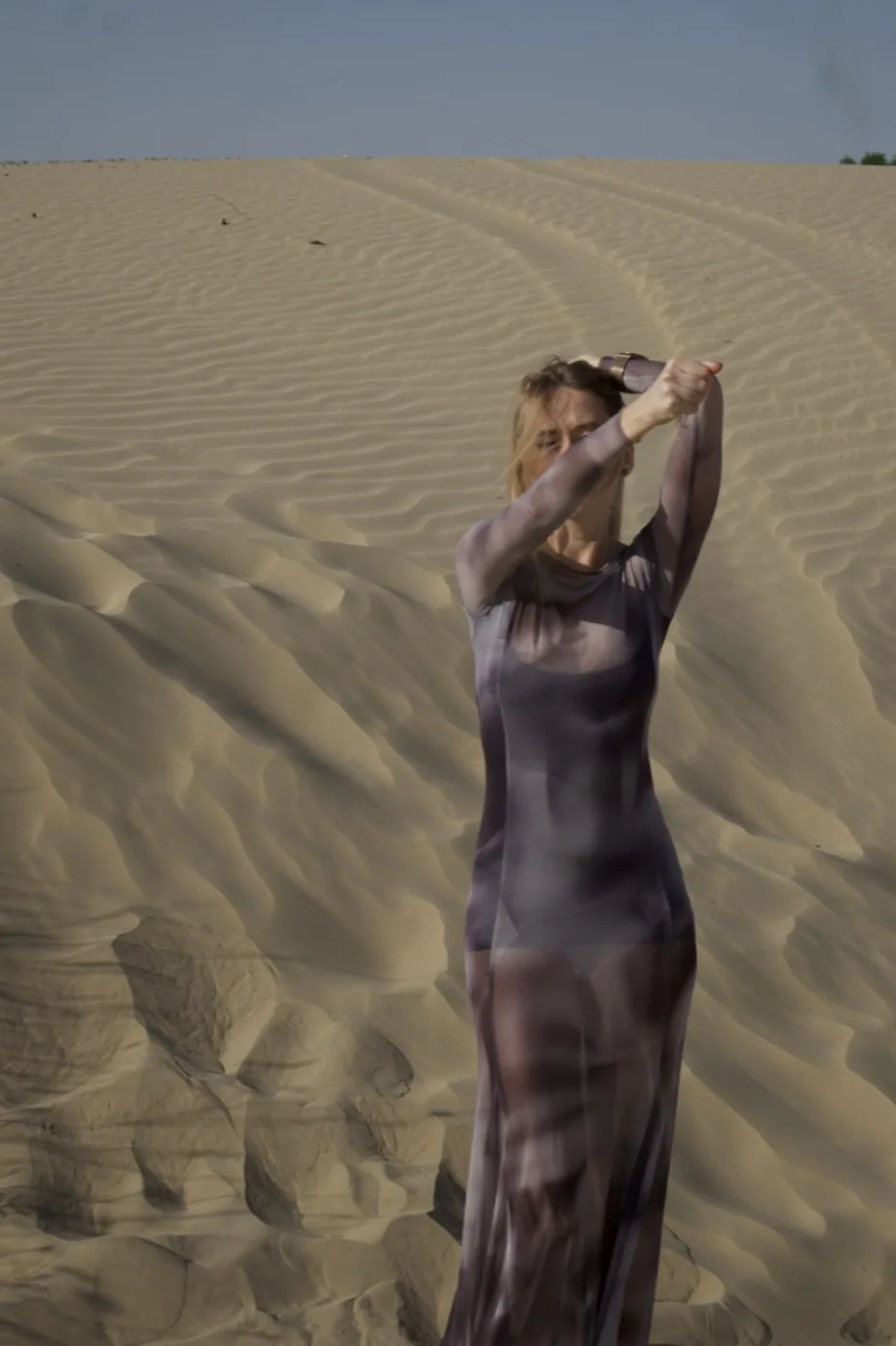
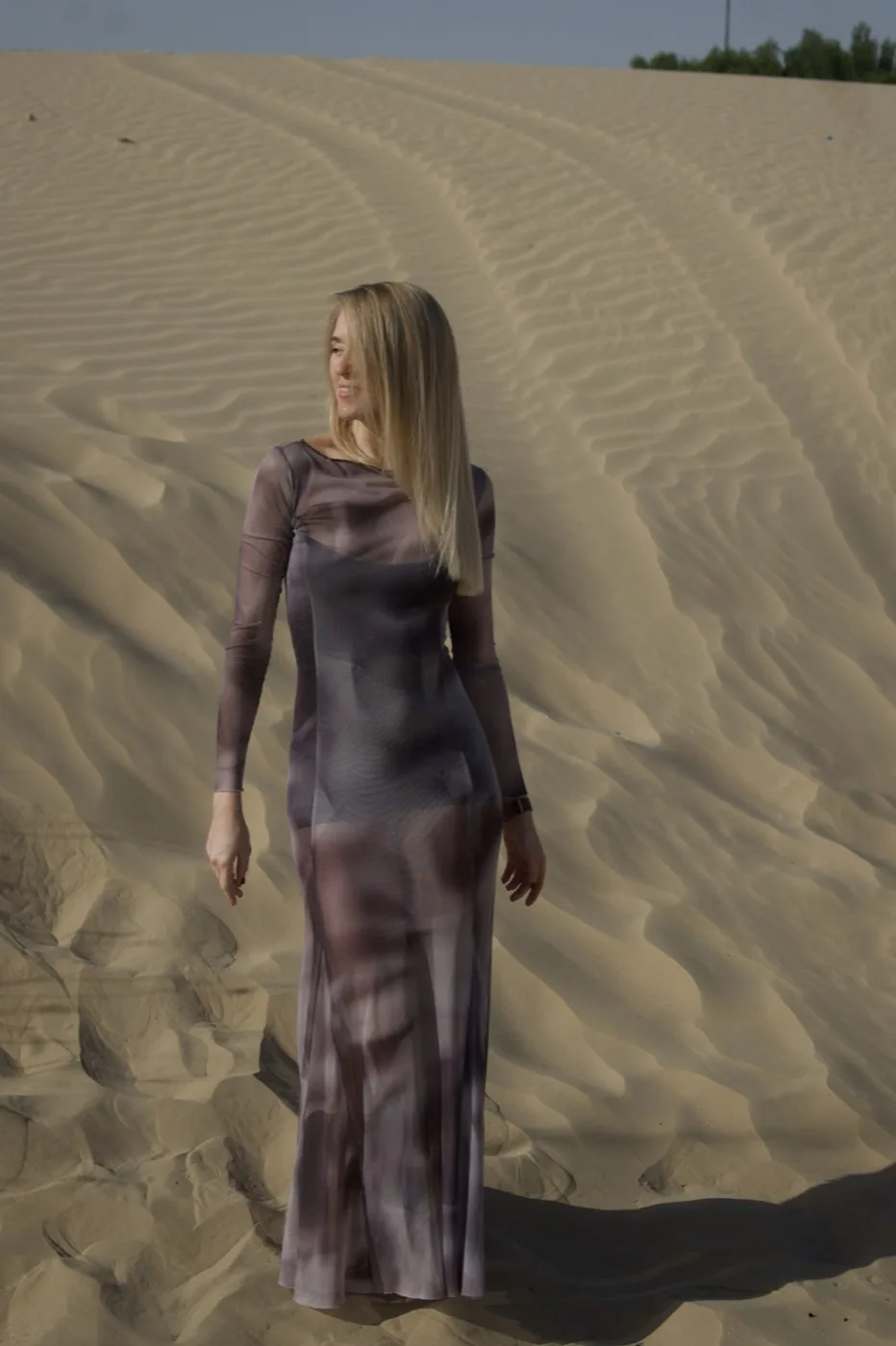
Sand gets everywhere, so plan accordingly. Closed shoes or sandals you don't mind filling with sand, outfit changes carried in a bag rather than worn for the drive, and a light layer for after sunset since desert temperatures drop fast once the sun is down. Bring water; there's no shop out there.
What to wear
Desert light is warm and golden, which changes how colour reads compared to a city or studio session. Flowing fabrics that move in the wind photograph well against the dunes; anything too structured or heavy tends to look stiff in an environment that's otherwise all soft lines. For a full breakdown of colour, fit and fabric choices by location, see the complete outfit guide.
Where to go
Al Marmoom Desert Conservation Reserve is the location I use most: closest to the city, easy to reach, and consistent dune formations. If you want to see it alongside the other locations I actually shoot at around Dubai, the full locations guide covers six spots plus a few hidden gems worth the extra drive.
A desert shoot is one of the simplest sessions to plan once you know the shape of it: pick a season, work the light window, keep the group small, and budget the half-day for the drive. The rest takes care of itself.
Want to plan one? Get in touch and we'll pick a date around the season and the light.
Frequently Asked Questions
Work with me
Based in Dubai. Available for desert, location and studio sessions across the UAE. WhatsApp is the fastest way to reach me.