Dubai is one of the most active modelling markets in the Middle East. Agencies here work across fashion, commercial, fitness, editorial, and luxury: and requirements for a first application differ by agency. Many actually start with current digitals and your measurements rather than a full portfolio, so it's worth checking what digitals vs a portfolio actually means before you book anything.
I've photographed models at every stage: first-timers who've never been in front of a camera, experienced models refreshing their look, and working professionals updating their books for new agency submissions. The questions are usually the same. How many photos do I need? What should I wear? Which photographer should I pick? What do agencies actually want to see?
This guide answers all of it. Honestly, from the photographer's side of the lens.
Start with your niche
Before you book a single shoot, decide what kind of modelling you're pursuing. This determines everything: the style of photos you need, the outfits you bring, and how the images should be lit and edited.
- Fashion / Editorial: Strong angles, directional light, avant-garde styling. Agencies want to see how you wear clothes and move on camera.
- Commercial / Lifestyle: Natural expressions, relatable energy. Think brand campaigns, product shoots, everyday scenarios.
- Fitness: Physique, movement, outdoor or gym settings. Athletic wear in natural light.
- Luxury / High-end: Refined, polished. Minimal styling, clean backgrounds. The portfolio needs to feel expensive.
- Runway: Full-length shots that showcase proportions, posture, and walk. Less about expression, more about line.
Most people fall somewhere between two of these. That's fine: but your portfolio should lean toward one direction rather than trying to cover everything at once.
How many photos do you need
As a general curation guide, a strong starting portfolio is usually built from around 10 to 15 strong images rather than a much larger set. Exact expectations vary by agency, but few reviewers want to scroll through 60 shots: they're looking at dozens of submissions a week and they make decisions in seconds.
10 exceptional photos will always outperform 40 average ones. Every image in your portfolio should earn its place. If you're hesitating about whether to include a shot, leave it out.
Within a portfolio of that size, you need variety. As a starting point for building it out, aim for a mix like this (agency upload counts and formats differ, so treat this as a curation guide, not a submission checklist):
- 2–3 clean headshots (different expressions, at least one natural smile)
- 2–3 full-length shots showing your proportions clearly
- 3–5 fashion or editorial images showing range and personality
- 1–2 natural / lifestyle shots
- 1 comp card layout (more on this below)
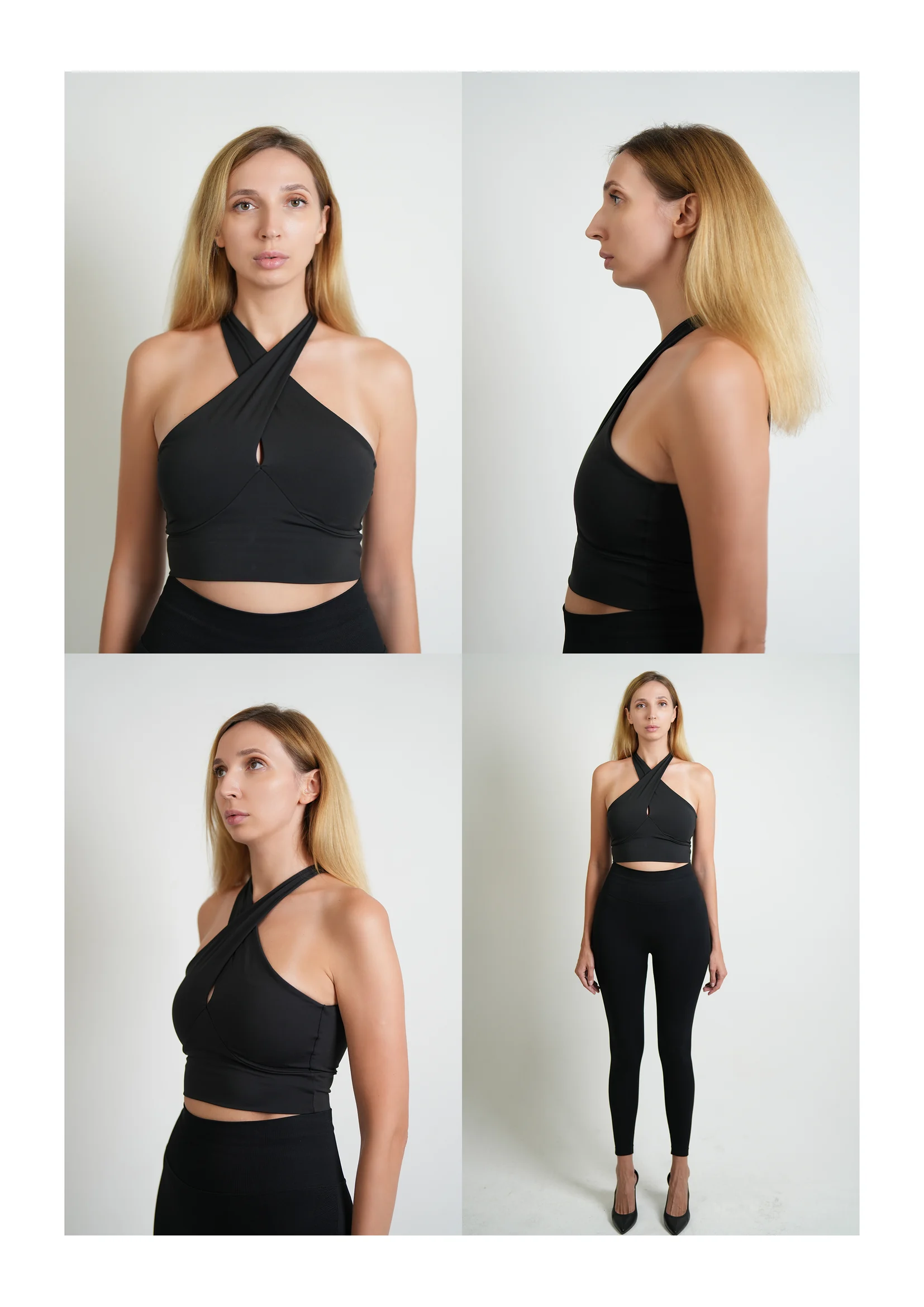
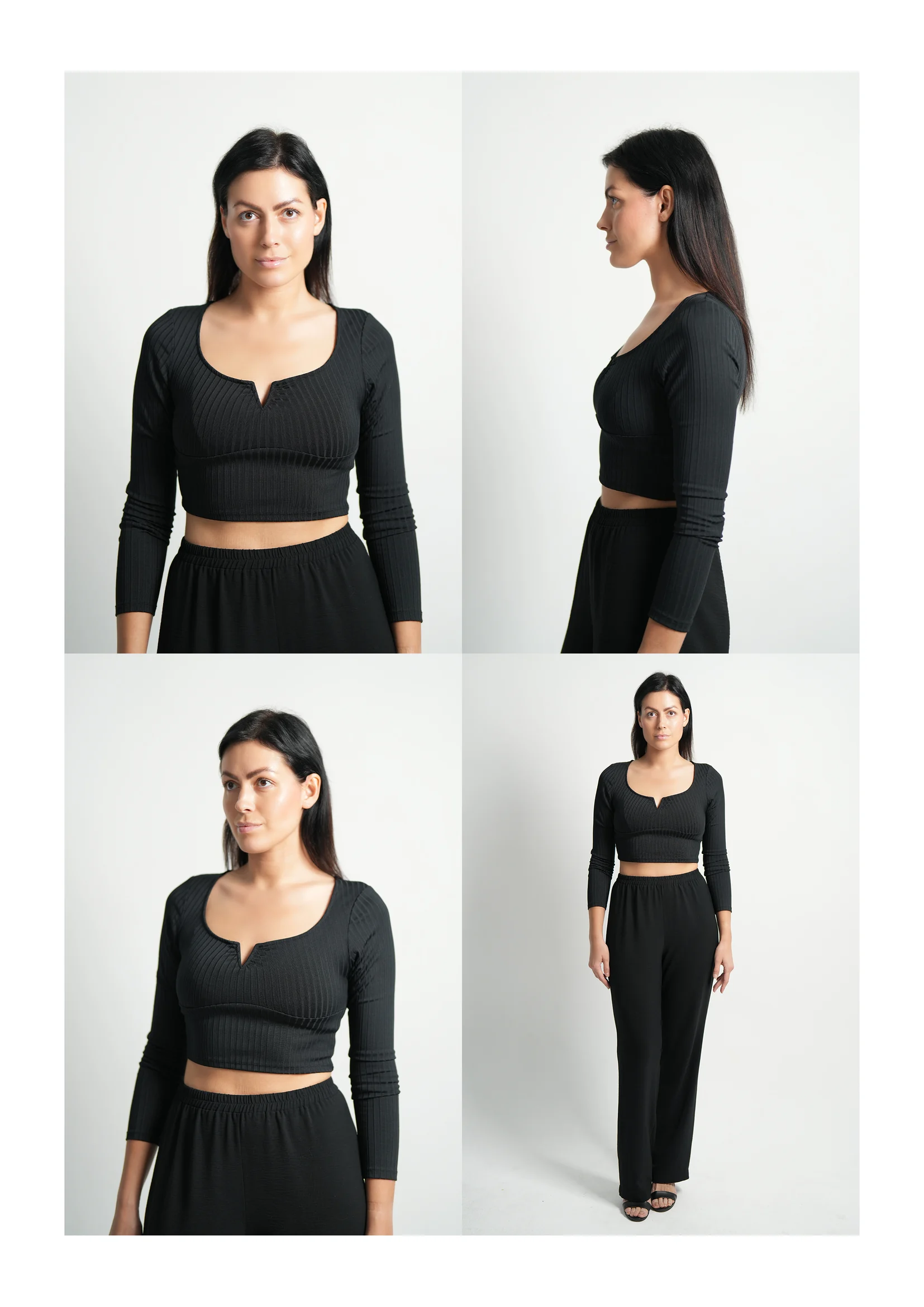
Real agency polaroid sheets from a UC Fashion Week casting session in Dubai: shot by Photoczaro. Each sheet shows front, profile, three-quarter, and full-length in a single clean layout.
What to wear
Bring at least three outfits to your portfolio shoot. More is better, but three is the minimum that gives you real variety without the session becoming chaotic.
- Look 1: Clean and fitted: Something simple and fitted in a neutral tone (white, black, cream, grey). This is your "agency clean look": agencies want to see your body, not your outfit. Think fitted jeans and a plain top, or a simple dress.
- Look 2: Fashion forward: Something that shows your style and personality. This could be structured, editorial, street, or elegant: whatever feels authentic to the direction you're pursuing.
- Look 3: Casual / lifestyle: Something relaxed. Natural, approachable. This is for the commercial shots that show you as a real person rather than a mannequin.
Avoid heavy logos, busy patterns, and anything that pulls attention away from your face and posture. Colour is fine, but stay away from anything neon or that clashes with your skin tone on camera.
The most common mistake I see: people come to a portfolio shoot wearing what they'd wear to a party. That's often the wrong call. Unless party wear is your niche, keep the focus on clean, versatile looks.
Hair, makeup and grooming
This section is about a styled portfolio shoot, not natural digitals. If an agency has asked you for digitals or polaroids, professional hair and makeup usually works against you there: those images are meant to show your current, unstyled appearance. For a portfolio shoot specifically, professional hair and makeup is worth the investment. This isn't about looking different from how you normally look: it's about looking like the best, most polished version of yourself. Good makeup photographs completely differently from everyday makeup, and a professional knows how to work with camera lighting.
Ideally, plan at least two different makeup looks across your session: one clean and natural, one with more definition. This gives your portfolio visual range without needing to change outfits every ten minutes.
For men: a clean shave or a well-groomed beard. Moisturised skin. Clean, styled hair. It sounds basic, but the difference between a groomed look and an ungroomed one is immediately visible on camera.
Choosing the right photographer
This is the decision that most affects the quality of your portfolio. The wrong photographer can produce technically acceptable images that still won't get you signed anywhere. The right one understands how agencies think, how to light a model for submission, and how to direct someone who may not have much experience in front of a camera.
When evaluating photographers in Dubai, look at:
- Their existing portfolio Do their portrait images have the look and feel your target agencies work with? If a photographer specialises in product photography, they're likely not the right choice for your modelling book.
- Their experience directing models Ask directly. Can they guide you through poses? Will they tell you when something isn't working? A good photographer is also a good director: they should make you feel comfortable and push you to try things.
- Editing style Look at the finished images in their portfolio, not just the behind-the-scenes shots. Are the edits clean and professional? Over-filtered or over-retouched images won't serve you well with agencies.
- What's included Confirm the number of final edited images, turnaround time, usage rights, and whether RAW files are available. In Dubai, most photographers deliver 20 to 30 selects from a 2-hour session, with 10 to 15 fully retouched finals.
- Budget vs value Portfolio sessions in Dubai range from AED 800 to AED 3,500+. The cheapest option is rarely the best value for a professional tool. Prioritise quality over cost.
Locations in Dubai
Dubai gives you a remarkable variety of settings within a short drive of each other: and location matters for a portfolio.
- Studio: Clean, controlled, professional. Essential for agency headshots and full-length looks. Every portfolio needs at least some studio images.
- Downtown / DIFC: Urban architecture, glass towers, strong geometric backgrounds. Great for fashion-forward editorial looks.
- Al Fahidi / Old Dubai: Textured walls, traditional architecture, warm tones. Beautiful for a more artistic or culturally grounded feel.
- The Desert: Golden light, vast space, dramatic. Shoot within the first hour after sunrise or the last hour before sunset: midday desert light is unusable.
- Beach / JBR / La Mer: Natural light, movement, lifestyle feel. Strong for commercial and fitness portfolios.
Check permit requirements before shooting in public spaces. Many popular locations in Dubai require a filming/photography permit, and enforcement is unpredictable. A photographer who knows the city will already have this handled or will advise you in advance.
What agencies in Dubai actually look for
I've worked with models who've signed to agencies after their portfolio shoot and spoken to bookers directly over the years. Here's what consistently comes up:
- Natural expression: Forced smiles and stiff poses read immediately. Agencies want to see someone who looks comfortable, not someone who looks like they're trying hard to look comfortable.
- Range: At least two or three clearly different moods within the portfolio. Not just different outfits, but different energy and expression.
- Clean skin representation: Not heavily retouched to the point where your actual skin texture is gone, but polished. Agencies need to know what they're working with.
- Correct measurements: Always include your stats with your submission: height, measurements (bust/waist/hips for female models, chest/waist for male), shoe size, and eye colour. Dubai agencies are precise about this for commercial and fashion bookings.
- Professionalism: The quality of the images signals your seriousness. Low-quality, poorly-lit portfolio images tell an agency something about how you approach your career.
The comp card: do you need one?
Yes. A comp card (also called a zed card or composite card) is a single-page document that shows 4 to 6 of your best images alongside your stats and contact information. It's the modelling equivalent of a business card: compact, professional, and what agencies send to clients when pitching you for a booking.
Standard comp card size is 5.5" x 8.5". The front usually has one strong hero image with your name. The back shows 3 to 5 images with your stats. Digital comp cards (PDF format) are increasingly common for email submissions, but printed versions still matter for in-person agency meetings.
Most photographers in Dubai who specialise in model portfolios can either design your comp card or refer you to someone who does.
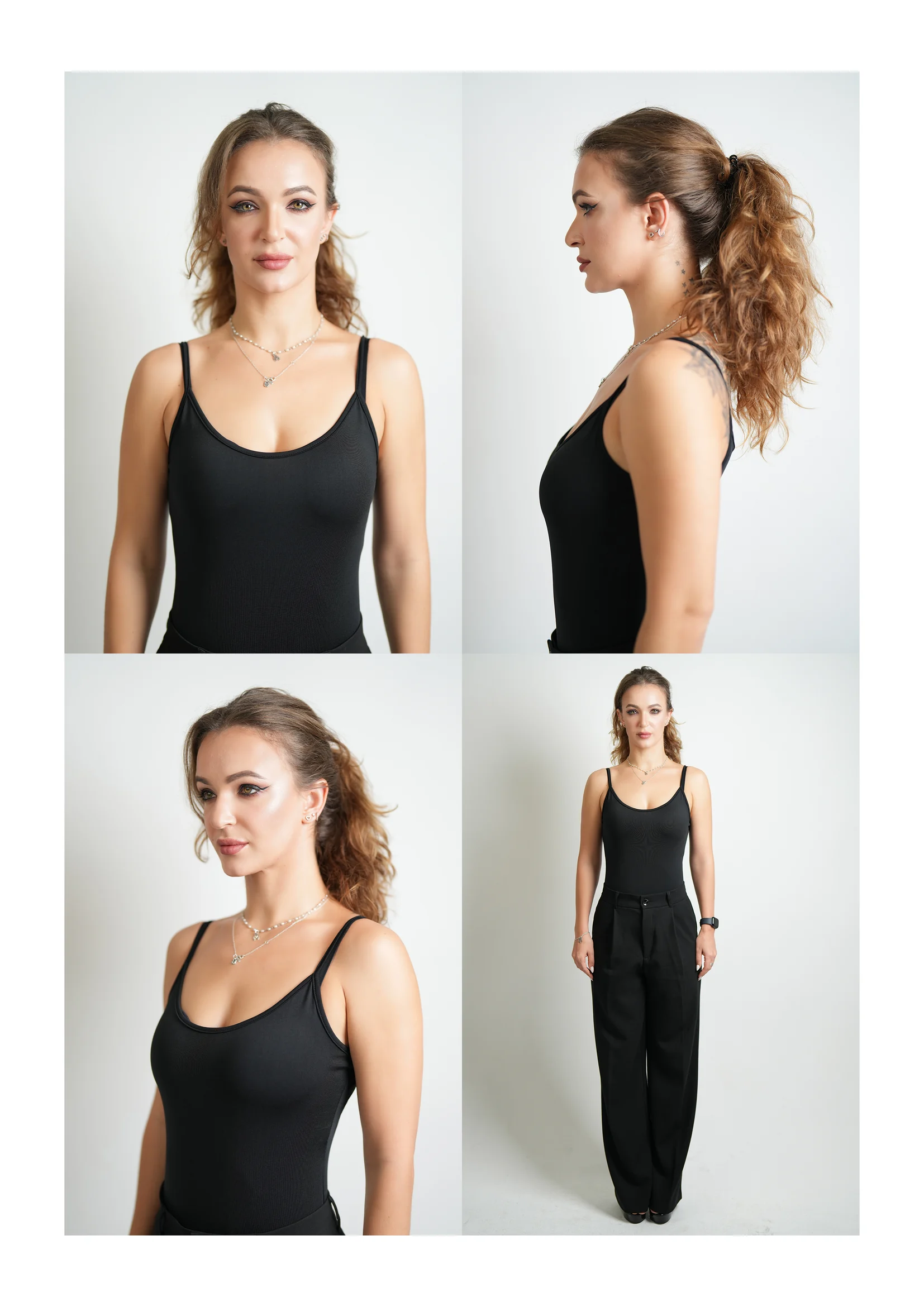
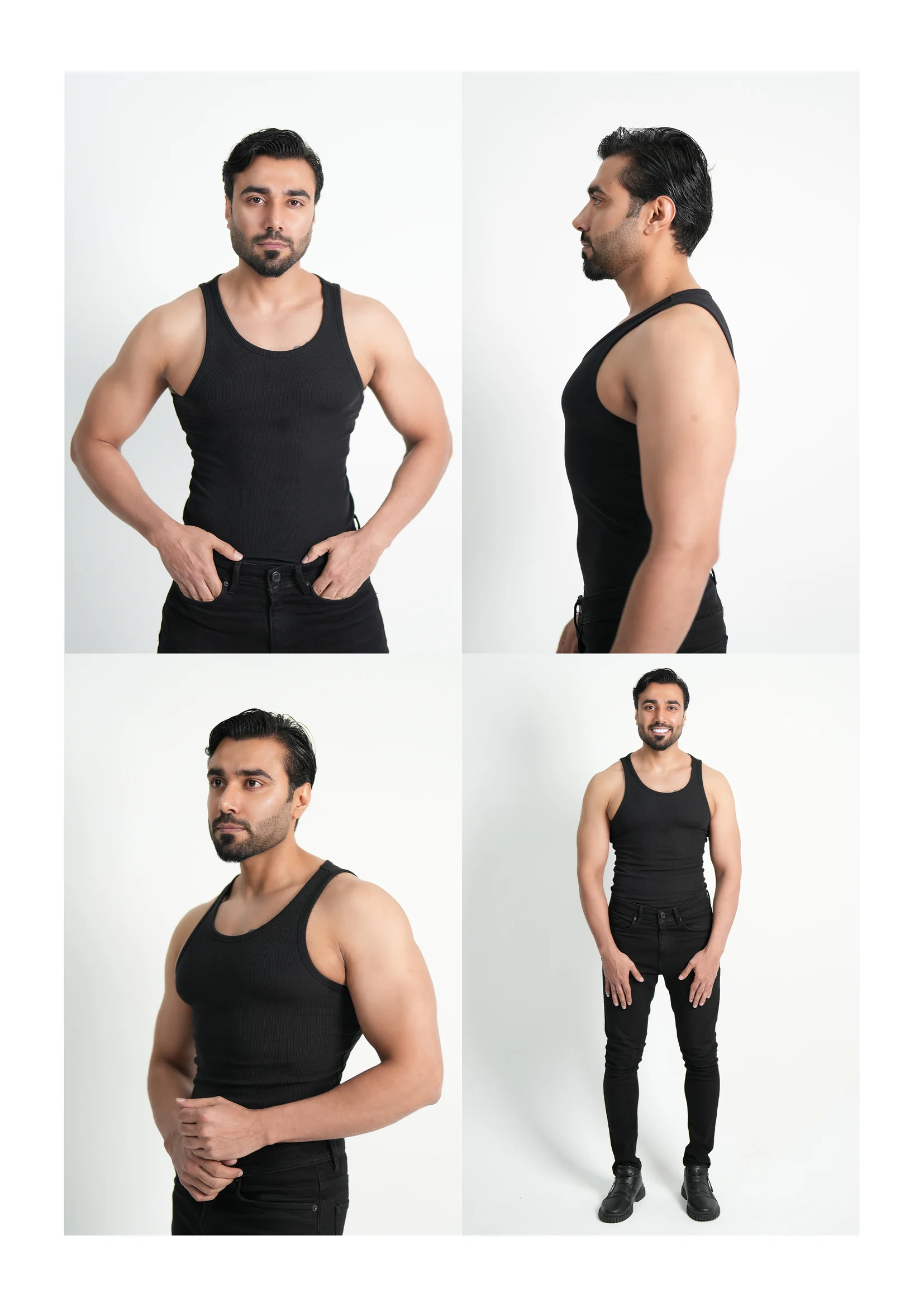
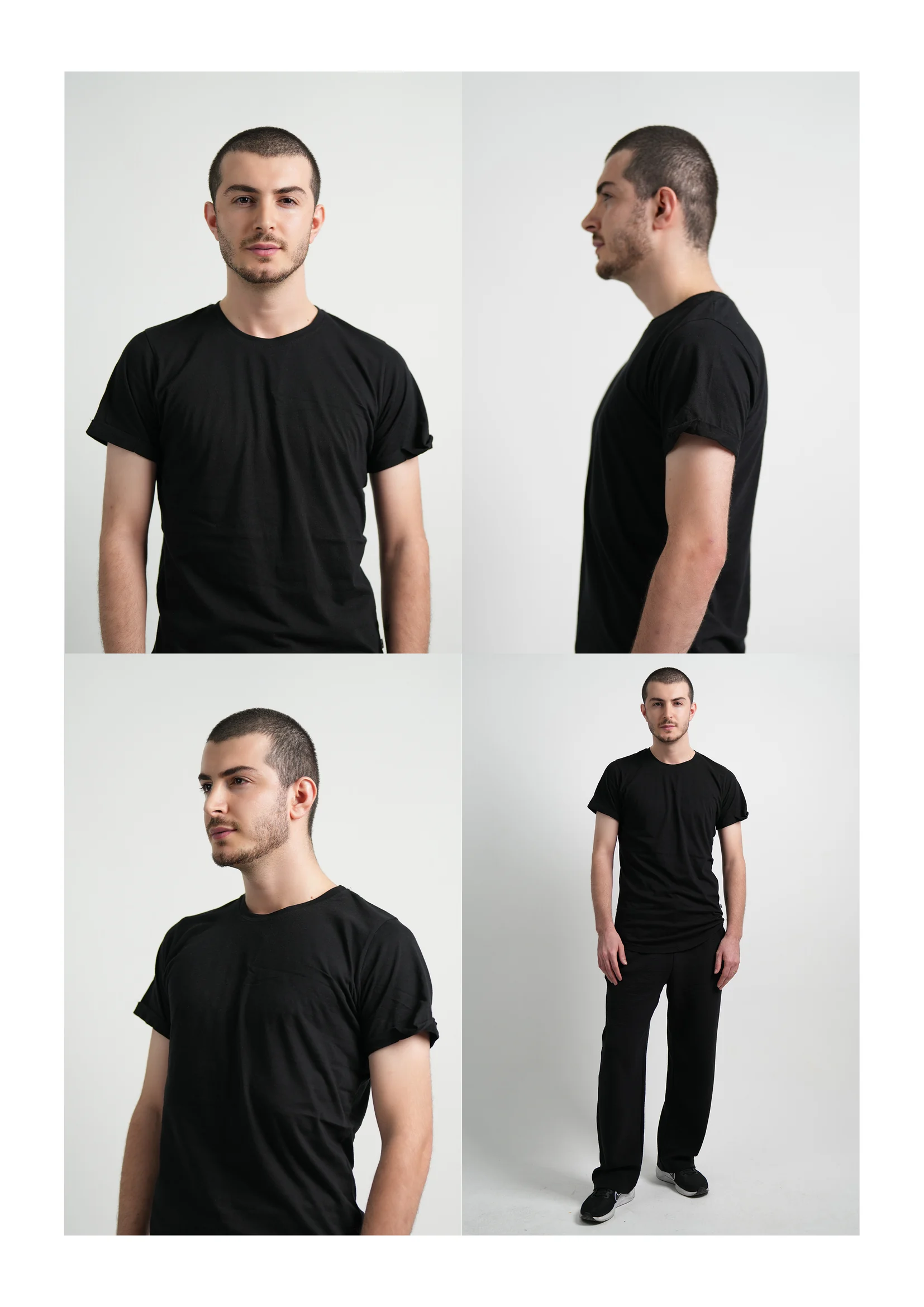
Agency polaroid sheets for female and male models: shot at the UC Fashion Week casting in Dubai. The format is standard across most Dubai agencies: four angles, plain background, neutral clothing.
After the shoot: submitting to agencies
Once you have your portfolio, approach agencies professionally. Dubai's main modelling agencies include MMG Model Management, Bareface Models, Deja Vu Agency, Lime Models, and FP Models, among others. Most accept submissions via their website or email, but there is no single format every agency uses.
Bareface and Diva Dubai currently demonstrate how differently these work in practice: Bareface's application asks for a small, specific set of photographs, while Diva Dubai's profile system asks for a headshot first, ten portrait-orientation images, and additional video for polaroids or catwalk depending on category. Rather than following a generic checklist, open the target agency's own current application page and match its stated instructions exactly: what to submit, how many files, and in what order.
Follow up once after two weeks if you haven't heard back. Beyond that, move on and continue building your experience.
Building a modeling portfolio in Dubai is a real investment: of time, money, and intention. The market here is competitive, but it's also active, international, and genuinely diverse in the kind of work available. A strong portfolio, shot properly, opens doors that are otherwise closed.
If you're ready to shoot, I work with models at every stage: from first portfolios to editorial refreshes to full agency submission packages. Get in touch and we'll build something worth showing.
If you are still choosing your first images, start with the photo mistakes that get applications ignored in Dubai.
Frequently Asked Questions
Work with me
Based in Dubai. Available for model portfolio sessions, agency submission shoots, and test shoot collaborations. Models and agencies: WhatsApp is the fastest way to reach me.
Once your portfolio is ready, you can apply to the Photoczaro Models roster. Applying is free, it is open to UAE-based adults aged 18 and over, and clear phone photos are welcome.
Once your photos are ready, apply to the Photoczaro Models roster: it's free, non-exclusive and open to every nationality living in the UAE. See how it works.