A model reached out recently asking about a portfolio session. In the same message, she mentioned her age. That one detail changed everything about how the conversation went from there.
She was open to any style, and said so. But her being open to it isn't what decides what a shoot with a minor can include. That gets worked out with her parent or legal guardian, in writing, before anything is booked. This is what I told her, and it's the process this article walks through: not as a legal document, but as an honest account of what I actually require before I photograph anyone under 18.
What actually happened
The request itself was ordinary: a portfolio shoot, no agency involved, reached out directly. What made it different was the single line disclosing her age. My response was immediate and consistent with every similar enquiry I've had: before we could plan anything, I'd need her parent or legal guardian to review and sign a consent agreement covering the session, the boundaries, and what happens to the images afterward.
That's not a formality I add on top of a normal booking. For a minor, it's the starting point. Nothing about concept, wardrobe, location or publication gets discussed as settled until a guardian has seen it and agreed to it in writing.
Why the guardian is the client, not the model
The parent or legal guardian is the contracting party. They're the one who books the session, pays for it, and approves what it includes. The minor model still signs the agreement herself, to confirm she understands what's involved and is freely willing to take part. That signature doesn't replace her guardian's authority, though. It sits alongside it.
In practice, this means a minor asking for something during the session, even something reasonable, isn't enough on its own to change the plan. If it wasn't in the brief her guardian already approved, it waits until the guardian says yes.
What has to be arranged before a single photo is taken
- Written consent from a parent or legal guardian, with reasonable confirmation that they're the person legally authorised to make that decision
- An agreed creative brief in writing (mood board, wardrobe, makeup, posing direction), approved before the session begins, not worked out on the day
- The guardian present and reasonably accessible for the entire session: setup, wardrobe changes, breaks and image review. The session doesn't proceed without this
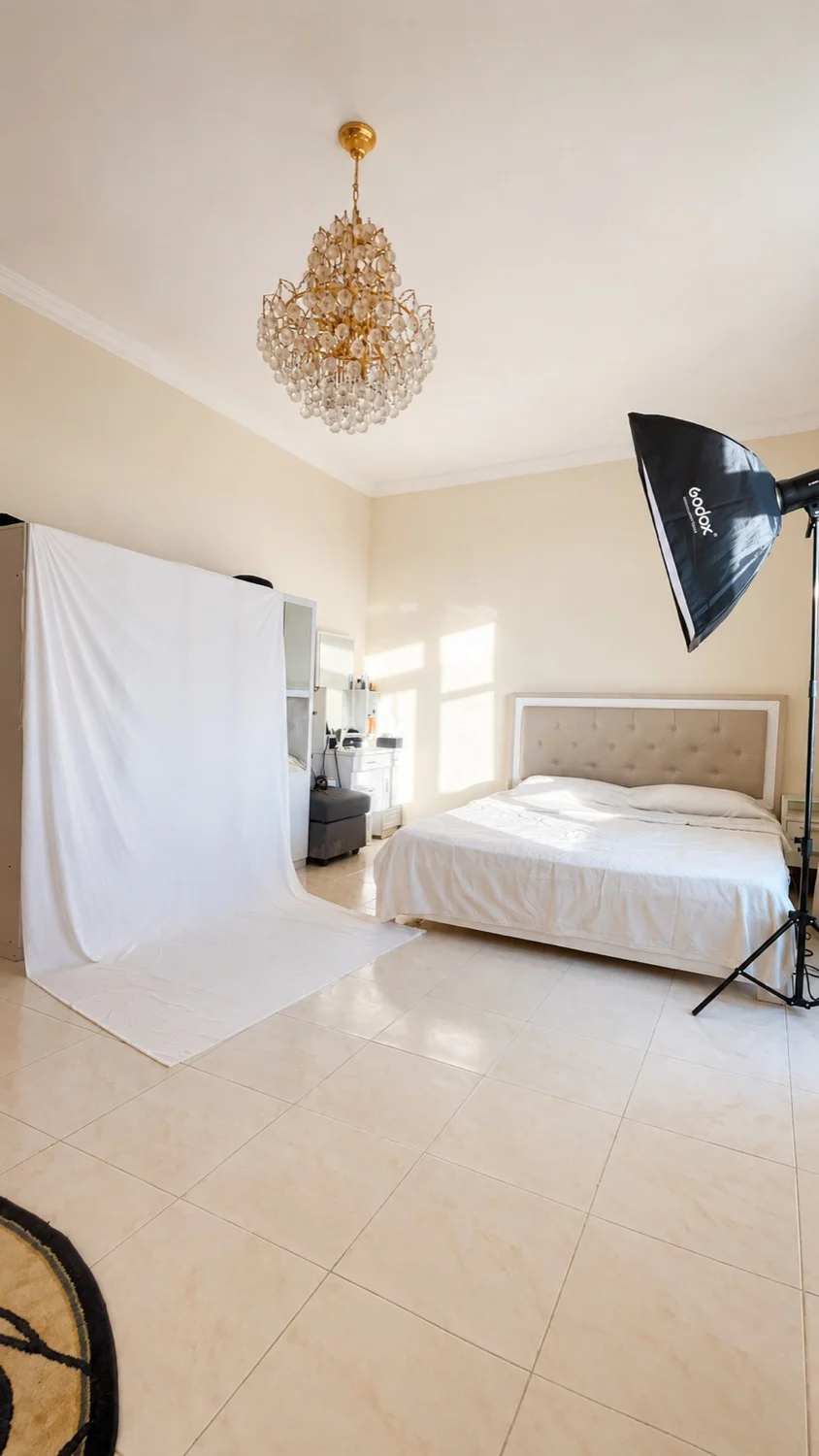
- A session location that's a professional studio or another location both parties have actually approved in advance
Reference images used to describe a look or a mood only describe direction. They don't authorise anything beyond the boundaries already agreed in writing.
What's simply not on the table
Some boundaries aren't negotiable, regardless of styling requests, reference images, or what anyone involved says they're comfortable with:
- No nudity, implied nudity, lingerie, sexualised styling, sexualised posing, or any age-inappropriate concept
- A private changing area for the model, which I do not enter
- Physical contact is avoided; any necessary adjustment is explained first and handled by the guardian, stylist or makeup artist wherever possible
- No transporting the minor model alone, and no private one-to-one meeting arranged outside the session
- All planning and delivery communication includes the guardian, with no messaging that excludes them
- The model or the guardian can pause or end the session at any point, for any reason
If a request during a session feels unsafe, unlawful or simply outside what was agreed, it gets declined. That applies whether the request comes from the model, a stylist, or anyone else on set.
What happens to the images afterward
The delivered, edited images are licensed for the model's personal portfolio, comp card, agency applications and personal social profiles. That's the default, and it doesn't automatically include anything public that I post.
Any use by Photoczaro, including the website, social pages, printed portfolio, or an editorial submission, is opt-in. The guardian has to specifically approve each type of use, and even then, I send the actual final images for written approval before anything is published. Silence isn't approval; it just means nothing goes live yet.
Publication permission also isn't indefinite. It ends at the earlier of 24 months from the session date or the model's eighteenth birthday. After that, continuing any public use needs a new release signed by her as an adult: her own decision, not one made for her as a minor.
I also don't disclose a minor model's school, home address, live location, personal phone number or similar identifying detail. Using her full name, a social handle, or a location tag needs separate written approval from her guardian.
What this doesn't cover
Everything above describes a personal portfolio session: a model or her guardian booking photography for her own use. It doesn't extend to selling images to a brand, running paid advertising, or an agency campaign built around a minor model. Any of that needs its own written agreement, and realistically should involve a lawyer, not just a photographer's standard paperwork.
I also don't promise outcomes. A photography session isn't agency representation, and it doesn't guarantee paid work, casting selection or publication. If I introduce a model to a contact or point her toward an agency, that's guidance, not a commitment on anyone's behalf. See the guide to Dubai's leading modeling agencies for what each one actually looks for.
The legal backdrop, briefly
The UAE has real legislation covering both child protection and how personal data, which includes photographs, can be processed. Federal Law No. 3 of 2016 Concerning Child Rights, widely known as Wadeema's Law, sets out the country's broad child-protection framework. Federal Decree-Law No. 45 of 2021 on the Protection of Personal Data governs consent for processing someone's personal data, which extends to their image.
None of this is legal advice, and the paragraph above isn't a summary of either law. If you're an agency, a brand, or a guardian planning something beyond a personal portfolio session, the right move is a UAE-qualified lawyer, not a photographer's consent form.
Before you book a session with a minor model
If you're a parent, guardian, or agency ready to reach out about a shoot involving someone under 18, it helps to have these ready:
- Confirmation of who has legal authority to consent on the model's behalf
- Availability for the guardian to be present for the entire session, not just to sign beforehand
- A general sense of the concept and wardrobe you have in mind, so it can be confirmed in writing before booking
- An understanding that any public use of the images is opt-in and requires separate written approval of the final photographs
- Clarity on whether this is a personal portfolio session or something commercial, since the two are handled very differently
Frequently Asked Questions
Planning a session for a minor model
If you're a parent, guardian or agency considering a portfolio session, reach out with the details and I'll walk you through the consent process before anything is booked.